Embark on a journey into the realm of BIM architecture, where innovation meets functionality to revolutionize modern architectural practices. Discover how this cutting-edge technology is reshaping the way architects, engineers, and contractors collaborate on projects, leading to more efficient and sustainable designs.
Overview of BIM Architecture
BIM (Building Information Modeling) architecture is a process that involves creating and managing digital representations of physical and functional characteristics of a building. It allows architects, engineers, and construction professionals to collaborate and work on a single platform to design, construct, and manage buildings more efficiently.
Importance of BIM in Modern Architectural Practices
- BIM improves coordination and communication among project stakeholders by providing a centralized platform for data sharing.
- It helps in detecting clashes and conflicts in the design phase, reducing errors and revisions during construction.
- BIM enables better visualization of the project, allowing clients to understand the design more comprehensively.
- It enhances the efficiency of the construction process, leading to cost savings and time management.
Examples of How BIM is Used in Architecture Projects
- Architects use BIM to create 3D models of buildings, which can be analyzed for structural integrity and energy efficiency.
- Engineers utilize BIM to simulate the behavior of building elements under various conditions, ensuring optimal performance.
- Contractors rely on BIM for project scheduling, cost estimation, and material procurement, streamlining the construction process.
Benefits of BIM Architecture
Building Information Modeling (BIM) offers numerous advantages in architectural design, revolutionizing the way projects are planned and executed.
Enhanced Visualization and Simulation
- BIM allows architects to create detailed 3D models, providing a realistic view of the project before construction begins.
- Simulation tools in BIM help in analyzing different design scenarios, optimizing building performance, and identifying potential issues early on.
Improved Coordination and Collaboration
- Unlike traditional methods where information is scattered across multiple documents, BIM centralizes all project data in a single platform.
- This streamlines communication and collaboration among architects, engineers, and contractors, ensuring everyone is working on the same page.
Efficient Project Management
- BIM enables better coordination of project timelines, costs, and resources, leading to improved efficiency in project delivery.
- With accurate data and real-time updates, project managers can make informed decisions, reducing delays and cost overruns.
Implementation of BIM in Architectural Projects
Implementing BIM in architectural projects involves a structured process to ensure seamless integration and efficient utilization of the technology. It requires a shift in traditional design workflows and collaboration among project stakeholders.
Steps for Integrating BIM into the Design Workflow
- Educate team members: Provide training and resources to familiarize team members with BIM technology and its benefits.
- Establish BIM standards: Develop standardized procedures and protocols for creating, sharing, and managing BIM data throughout the project lifecycle.
- Collaborate with stakeholders: Encourage open communication and collaboration among architects, engineers, contractors, and clients to maximize the benefits of BIM.
- Implement BIM software: Select and implement BIM software that aligns with project requirements and team capabilities.
- Integrate BIM into project phases: Incorporate BIM workflows into all project phases, from conceptual design to construction and facility management.
Challenges and Solutions for Adopting BIM in Architectural Firms
- Challenge: Resistance to change – Some team members may be hesitant to adopt new technology and workflows.
- Solution: Provide comprehensive training and support to help team members transition to BIM smoothly.
- Challenge: Interoperability issues – Compatibility issues between different BIM software platforms can hinder collaboration.
- Solution: Standardize file formats and establish protocols for sharing BIM data to ensure seamless interoperability.
- Challenge: Initial investment costs – Acquiring BIM software and training resources can be expensive for architectural firms.
- Solution: Evaluate long-term cost savings and efficiency gains associated with BIM implementation to justify the initial investment.
BIM Software and Tools
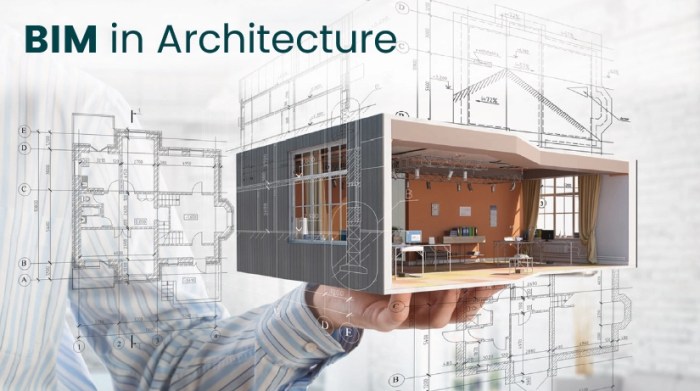
In the field of architecture, Building Information Modeling (BIM) software plays a crucial role in streamlining the design and construction processes. These tools offer a wide range of features that enhance efficiency and collaboration within architectural projects.
Popular BIM Software
- Autodesk Revit: Known for its robust modeling capabilities and integration with other Autodesk software.
- Graphisoft Archicad: Offers a user-friendly interface and advanced tools for architectural design.
- Bentley MicroStation: Focuses on 3D modeling and collaboration for large-scale projects.
- Allplan: Provides comprehensive tools for BIM modeling, visualization, and documentation.
Comparison of BIM Tools
- Autodesk Revit vs. Graphisoft Archicad:
- Revit is widely used in the industry and offers seamless integration with other Autodesk software, while Archicad is known for its intuitive interface and advanced modeling tools.
- Both tools have strong BIM capabilities, but Revit may be preferred for its interoperability with other software.
- Bentley MicroStation vs. Allplan:
- MicroStation focuses on 3D modeling and collaboration, making it suitable for large-scale projects, while Allplan provides an all-in-one solution for BIM modeling, visualization, and documentation.
- Users may choose MicroStation for its emphasis on collaboration or Allplan for its comprehensive set of tools.
Efficiency of BIM Software
Building Information Modeling software enhances the efficiency of architectural projects by allowing for:
Real-time collaboration among team members
Automated design changes and updates
Clash detection and resolution during the design phase
Improved visualization and communication of design intent
Outcome Summary
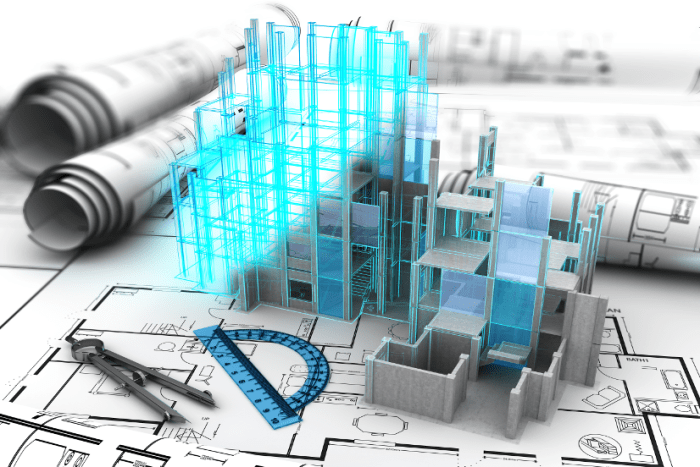
In conclusion, BIM architecture stands as a beacon of progress in the architectural landscape, offering unprecedented levels of efficiency, collaboration, and innovation. As the industry continues to embrace this transformative tool, the future of architecture is indeed bright and promising.
Clarifying Questions
What are the key features of BIM architecture?
BIM architecture allows for 3D modeling, data management, collaboration, and visualization of building projects in a single platform.
How does BIM improve communication among project stakeholders?
BIM enables real-time updates and information sharing, fostering better communication and coordination between architects, engineers, and contractors.
Is BIM architecture only suitable for large-scale projects?
No, BIM can be beneficial for projects of all sizes, offering efficiency and accuracy in design and construction processes.