Delving into shabby chic interior design, this introduction immerses readers in a unique and compelling narrative. Shabby chic style brings together the charm of vintage elements with a touch of elegance, creating a cozy and inviting atmosphere in any space.
From distressed furniture to delicate floral patterns, this design aesthetic is all about embracing imperfections and celebrating the beauty of the past.
As we journey through the key elements, color palettes, and textures that define shabby chic interior design, get ready to discover how to transform your living space into a haven of timeless beauty and comfort.
Introduction to Shabby Chic Interior Design
Shabby Chic interior design is a style that embraces a worn, lived-in look with a touch of elegance and femininity. It combines vintage elements with soft pastel colors, distressed furniture, and delicate fabrics to create a cozy and romantic atmosphere.
History and Origins of Shabby Chic Style
The term “Shabby Chic” was coined by interior designer Rachel Ashwell in the late 1980s. It was inspired by the English country cottages and grand French chateaus, where furniture and decor were passed down through generations, showing signs of wear and tear.
Key Elements of Shabby Chic Interior Design
- Distressed Furniture: Furniture pieces are often painted in soft, muted colors and gently distressed to create a weathered look.
- Soft Pastel Colors: Soft shades of pink, blue, green, and white are commonly used to create a light and airy feel.
- Vintage Accents: Vintage accessories like lace curtains, floral patterns, and crystal chandeliers add a touch of nostalgia.
- Delicate Fabrics: Fabrics like cotton, linen, and lace are used for upholstery, curtains, and bedding to enhance the romantic feel of the space.
Color Palette and Textures in Shabby Chic Design
In shabby chic interior design, the color palette is typically soft and muted, creating a cozy and inviting atmosphere. Pastel shades such as light pink, baby blue, mint green, and lavender are commonly used to achieve the shabby chic look.Textures play a crucial role in shabby chic design as they add depth and visual interest to the space.
Distressed wood, vintage lace, chipped paint, and faded fabrics are commonly used textures to create the worn-in, comfortable feel associated with shabby chic style.
Layering Textures in a Shabby Chic Space
When layering textures in a shabby chic space, it’s important to mix and match different textures to create a harmonious yet eclectic look. For example, you can pair a distressed wooden coffee table with a plush velvet sofa and a fringed throw blanket for a cozy and inviting feel.
Mixing textures adds dimension and personality to the space, making it feel lived-in and charming.
Furniture and Decor in Shabby Chic Style
Shabby chic interiors are characterized by a mix of vintage, distressed, and repurposed furniture and decor items that create a cozy and charming atmosphere in a space.
Common Types of Furniture in Shabby Chic Interiors
Shabby chic style often incorporates furniture pieces that have a weathered or distressed look, such as:
- Antique dressers and vanities
- Distressed wooden tables and chairs
- Vintage upholstered sofas and armchairs
- Wrought iron bed frames
Tips for Distressing Furniture for a Shabby Chic Look
Distressing furniture is a key technique in achieving the shabby chic aesthetic. Here are some tips to distress furniture effectively:
- Use sandpaper to create a worn look on edges and corners.
- Apply a crackle glaze for a weathered paint effect.
- Use a hammer or chains to create dents and dings for an aged appearance.
- Layer different paint colors and then sand to reveal the layers underneath.
Importance of Vintage and Repurposed Items in Shabby Chic Decor
Vintage and repurposed items add character and charm to shabby chic decor, creating a unique and eclectic look. These items help tell a story and bring a sense of history and nostalgia to the space. Incorporating vintage pieces also promotes sustainability by giving new life to old items rather than buying new.
Fabrics and Patterns in Shabby Chic Decor
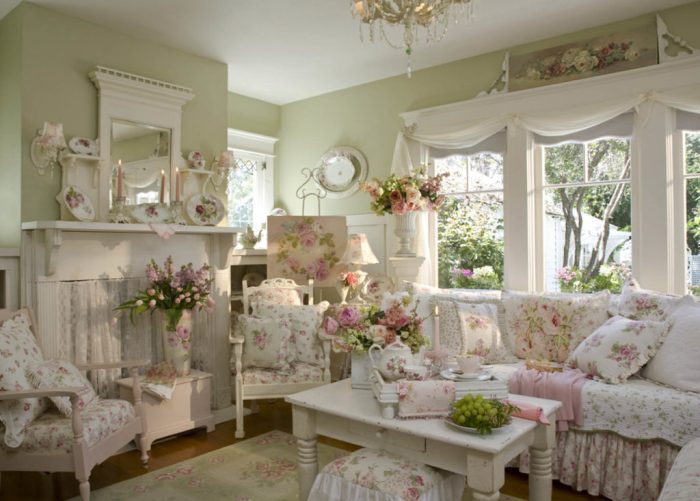
Shabby chic decor is known for its use of soft, delicate fabrics and charming patterns that create a cozy and vintage-inspired atmosphere in a home.
Popular Fabric Choices for Upholstery and Curtains
In shabby chic design, popular fabric choices for upholstery and curtains include cotton, linen, and chenille. These fabrics are lightweight and have a slightly worn look, adding to the overall shabby chic aesthetic. They often come in pastel colors or floral prints, enhancing the romantic and feminine feel of the space.
Mixing and Matching Patterns Effectively
To mix and match patterns effectively in a shabby chic interior, start by choosing a dominant pattern that will serve as the focal point. This could be a floral print, toile, or gingham pattern. Then, incorporate smaller-scale patterns in complementary colors to create visual interest without overwhelming the space.
Mixing stripes with florals or checks with polka dots can add depth and character to the decor.
Examples of Commonly Used Patterns
Floral Patterns
Floral prints are a staple in shabby chic decor, bringing a touch of nature indoors. Roses, peonies, and daisies are popular choices for fabrics in shabby chic interiors.
Toile Patterns
Toile de Jouy is a classic pattern featuring scenic or narrative designs in a single color on a light background. It adds elegance and sophistication to shabby chic decor.
Gingham Patterns
Gingham is a simple, checked pattern that adds a country charm to shabby chic interiors. It comes in various colors, but the most common are soft pastels like pale blue, pink, and yellow.
Lighting and Accessories in Shabby Chic Design
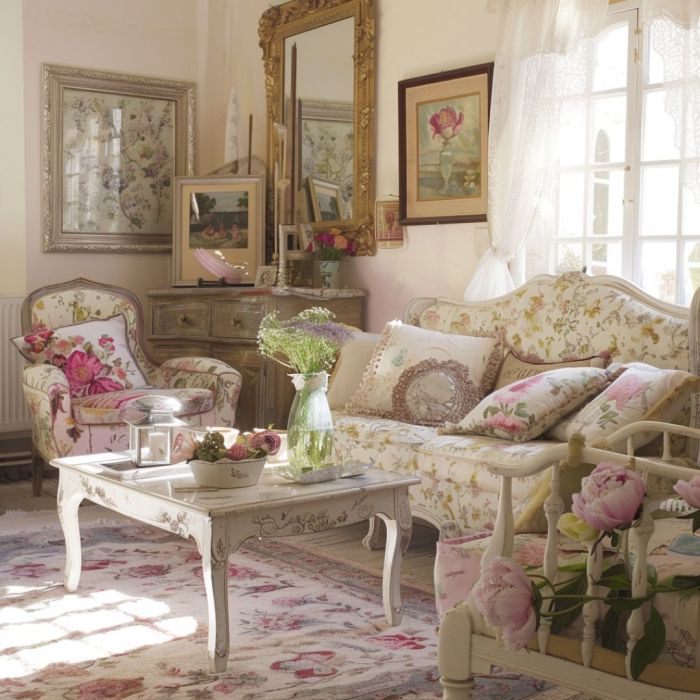
Lighting and accessories play a crucial role in enhancing the cozy and inviting ambiance of a shabby chic interior. By incorporating vintage lighting fixtures and essential accessories, you can truly bring out the charm of this design style.
Vintage Lighting Fixtures
When it comes to lighting in shabby chic design, vintage fixtures are key. Chandeliers, sconces, and table lamps with intricate details and a distressed finish can add a touch of elegance and nostalgia to the space. Opt for fixtures with ornate designs and soft, warm lighting to create a romantic and cozy atmosphere.
Essential Accessories
Accessories such as mirrors, frames, and candles are essential in completing the shabby chic look. Mirrors with distressed frames can help reflect light and create the illusion of a larger space, while vintage frames add a personal touch to the decor.
Candles in vintage holders or candelabras can enhance the ambiance with a soft, flickering glow.
Last Word
In conclusion, shabby chic interior design offers a blend of old-world charm and modern sophistication, making it a popular choice for those seeking a cozy yet stylish home decor. By incorporating vintage furniture, soft pastel hues, and whimsical accessories, you can create a space that exudes warmth and character.
Embrace the elegance of shabby chic design and let your home tell a story of timeless beauty and comfort.
Quick FAQs
What defines shabby chic interior design?
Shabby chic interior design combines vintage elements with a touch of elegance, focusing on distressed furniture, pastel colors, and delicate textures to create a cozy and inviting space.
How can I distress furniture for a shabby chic look?
To distress furniture, you can use techniques like sanding, painting, or using a crackle medium to achieve that worn-out, vintage appearance typical of shabby chic style.
What are some popular fabric choices in shabby chic decor?
Popular fabric choices in shabby chic decor include cotton, linen, and lace for upholstery and curtains, adding a soft and romantic touch to the overall design.
What role does lighting play in shabby chic design?
Lighting in shabby chic design is crucial for creating a cozy ambiance. Vintage lighting fixtures like chandeliers or sconces can enhance the nostalgic charm of the space.
Why are vintage and repurposed items important in shabby chic decor?
Vintage and repurposed items add character and history to shabby chic decor, bringing a sense of uniqueness and charm to the overall design.